Video credit: YouTube.
A pedicure can be much more than nail trimming, shaping, and polish.
For many customers, the best part begins when they sit down, put their feet into warm water, and finally get a few minutes to relax.
That is why a foot bath massager for salons can be such a useful addition to a professional beauty business.
A good salon foot spa can combine warm water, bubbles, vibration, massage rollers, comfortable foot support, and an attractive design. Suddenly, a routine pedicure starts feeling more like a mini spa treatment.
But there is a catch.
Choosing a foot spa for a salon is not the same as buying one for occasional home use. A salon machine has to deal with repeated appointments, frequent cleaning, different customer preferences, technician workflow, plumbing requirements, and the realities of a busy working environment.
So, what should you look for?
Let’s take a closer look at everything that matters when choosing a professional foot bath massager for a salon.
What Is a Foot Bath Massager for Salons?
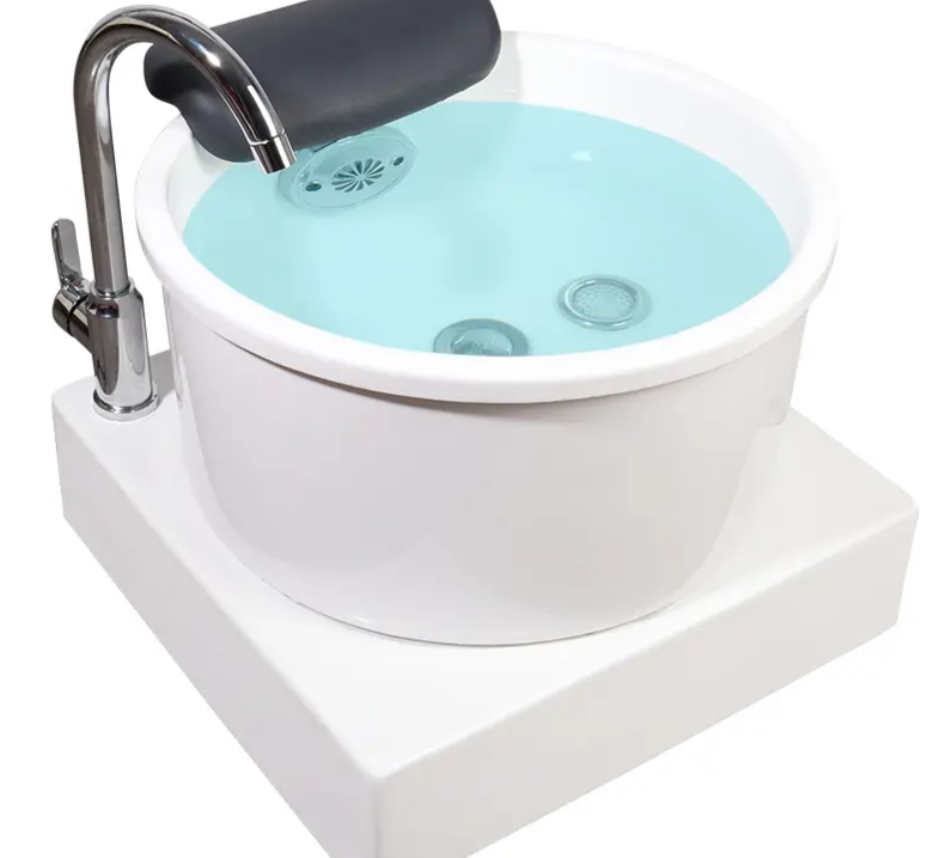
A foot bath massager is a foot-soaking system designed to combine water-based relaxation with massage or spa functions.
Depending on the model, you may find features such as:
- Adjustable water heating
- Bubble massage
- Vibration massage
- Manual massage rollers
- Acupressure nodes
- Digital temperature controls
- Footrests
- Drainage systems
- Non-slip feet
- LED lighting
- Built-in product compartments
Some units are compact and portable. Others are designed as part of a complete pedicure spa chair.
That distinction is important because your salon’s space, budget, plumbing, and service style should determine which type you buy.
Why a Salon Foot Spa Can Improve the Customer Experience
Imagine two pedicure appointments.
In the first, the customer sits in a basic chair while their feet are placed into a simple basin.
In the second, they sit comfortably, lower their feet into warm water, feel gentle bubbles around their feet, and enjoy a relaxing massage function while the technician gets to work.
The actual nail service may be similar.
The experience isn’t.
That difference is important for salons competing on customer experience.
A premium foot spa can help make the pedicure feel more relaxing and memorable. It can also help salons create upgraded service packages rather than offering every customer exactly the same experience.
If you’re building a complete nail-service area, take a look at this pedicure salon equipment guide for additional equipment ideas.
Foot Bath Massager vs. Pedicure Spa Chair
Before buying anything, decide whether you need a standalone foot bath or a complete pedicure station.
Standalone Foot Bath Massager
A standalone foot bath is generally smaller and more flexible.
It can be useful for:
- Small salons
- Home-based salons
- Beauty treatment rooms
- Mobile services
- Salons with limited plumbing
- Businesses testing a new pedicure service
The biggest advantage is flexibility.
You don’t necessarily need to redesign the entire salon just to add a foot-spa service.
Pedicure Spa Chair
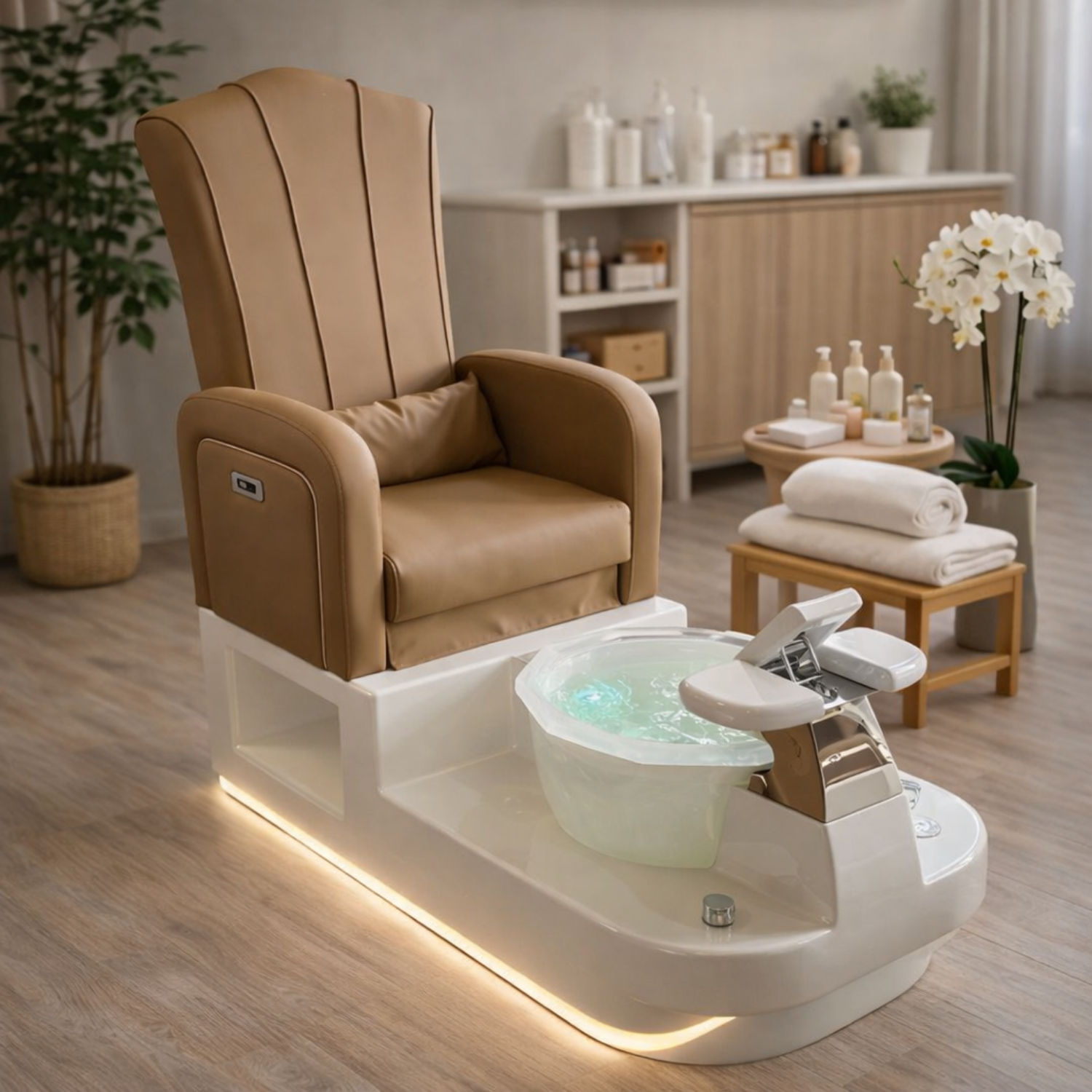
A professional pedicure spa chair combines the customer’s seating area with the foot basin and often includes additional massage and plumbing features.
Depending on the model, you may get:
- Reclining seating
- Integrated foot basin
- Massage functions
- Adjustable footrests
- Water connections
- Drainage
- Hand shower
- Storage
- LED lighting
This type of setup can create a much more luxurious appearance.
7 Features to Look for in a Professional Foot Bath Massager
1. Adjustable Temperature Control
Temperature control is one of the most useful features in a heated foot bath.
Different customers have different preferences. What feels pleasantly warm to one person can feel far too hot to another.
Some foot spa models offer temperature settings in the approximate range of 95°F to 118°F, or about 35°C to 48°C.
For salon use, the important point is not simply the maximum temperature. Look for a system that lets the technician select and monitor an appropriate setting.
Always follow the manufacturer’s operating instructions and use temperatures that are comfortable and appropriate for the customer.
2. Bubble Massage
Bubbles can make a foot bath feel considerably more relaxing.
They also add movement to the water and can give the customer the feeling of being in a small jacuzzi.
However, there is another question that matters even more:
How easy is the bubble system to clean?
For home use, you might tolerate a complicated cleaning routine.
In a salon, you cannot afford equipment that takes forever to maintain between appointments.
3. Vibration Massage
Vibration provides another type of massage sensation.
Some models allow vibration to operate independently, while others combine it with heat and bubbles.
Adjustable or switchable settings are useful because customers have different comfort preferences.
A relaxing vibration should feel like part of the service, not like someone secretly parked a washing machine under the chair.
4. Massage Rollers
Massage rollers are another popular feature.
Many foot bath massagers use removable rollers with raised nodes that the customer moves their feet across.
One important detail: rollers on many affordable foot spas are manual rather than motorized.
That isn’t necessarily a problem.
It simply means the customer controls the movement by gently rolling their feet over the rollers.
For salon owners, removable rollers are particularly useful because they can make cleaning easier.
5. Acupressure or Textured Foot Surfaces
Some foot baths have raised nodes or textured surfaces designed to provide additional pressure beneath the feet.
These can make the experience more interesting and can complement manual rollers.
Again, customer comfort matters.
Not everyone enjoys strong pressure, so avoid presenting these features as suitable for every person or every situation.
6. Stable, Non-Slip Construction
A salon foot bath should sit securely on the floor.
Look for a stable base and non-slip feet.
This becomes particularly important when the equipment is being used repeatedly throughout the day.
7. Easy Cleaning and Maintenance
This is the feature I would put near the very top of the buying checklist.
It isn’t glamorous.
It won’t make your Instagram photos go viral.
But it matters enormously.
Choose equipment that gives you easy access to water-contact surfaces and removable components.
Salon Foot Spa Hygiene: The Most Important Consideration
A shared foot spa needs proper cleaning and disinfection between customers.
This isn’t the place to cut corners.
A beautiful chair with LED lighting and ten massage modes is still a poor salon investment if its water-contact components are difficult to clean.
A practical cleaning routine should include draining the basin, removing visible debris, cleaning the surfaces, rinsing, applying an appropriate disinfectant according to its label, allowing the required contact time, and rinsing again where required.
Circulating systems may require additional cleaning procedures for internal water pathways, jets, screens, and other components.
For official guidance, read the EPA’s salon foot-spa cleaning and disinfection guidance.
Why Cleaning Access Matters
Before buying, look carefully at the basin.
Can you reach the corners?
Can the rollers come out?
Can screens or filters be removed?
Are there hidden areas where residue could collect?
Does the manufacturer explain the cleaning procedure clearly?
These questions are much more important than whether the unit has seven different LED colors.
Portable Foot Spa vs. Built-In Pedicure Spa
When a Portable Unit Makes Sense
A portable foot bath may be the better choice if you:
- Have limited floor space.
- Rent a small beauty room.
- Don’t want major plumbing work.
- Offer occasional pedicures.
- Want to add a new service without remodeling.
- Need equipment that can be moved.
When a Built-In Unit Makes Sense
A built-in pedicure station may be more suitable if:
- Pedicures are a major source of revenue.
- You have dedicated space.
- Your salon already has suitable plumbing.
- You want a premium appearance.
- You want integrated seating and massage functions.
- You plan to operate the same station for many years.
If you’re upgrading the complete salon, your furniture matters too. See this salon furniture guide for ideas on creating a coordinated setup.

How Much Space Do You Need?
This is where many salon owners make a surprisingly simple mistake.
They measure the equipment.
That’s it.
But you also need space for the customer, technician, stool, trolley, tools, storage, and movement around the station.
Before purchasing, measure:
- Total width
- Total depth
- Height
- Distance from water connections
- Drainage location
- Electrical outlet location
- Technician working space
- Customer entry and exit space
A chair that looks compact in a product photograph can feel enormous when it arrives in a small room.
Your measuring tape is cheaper than a remodeling project.
Don’t Forget Technician Ergonomics
A salon isn’t only a place where customers sit.
It’s also a workplace.
The technician may perform several pedicures in a day, so the equipment should make it easy to work comfortably.
Look for:
- Adjustable footrests
- Comfortable technician stools
- Convenient basin height
- Easy-to-reach controls
- Good legroom
- Easy access to tools
If the technician has to bend awkwardly for every appointment, a luxurious chair can become a very expensive workplace headache.
How Important Is Noise?
Very.
Imagine sitting down for a relaxing pedicure.
Warm water.
Soft music.
Then the pump starts making a noise that sounds like a small motorcycle.
Not exactly five-star relaxation.
If possible, test the equipment before buying or ask the supplier about operating noise.
Quiet pumps and smooth massage mechanisms can make a noticeable difference in the overall atmosphere of your salon.
Should You Choose a Pipeless Pedicure Spa?
Pipeless pedicure systems are designed to reduce or eliminate certain internal water pathways used by conventional circulating systems.
This can make some cleaning and maintenance tasks easier.
But pipeless does not mean maintenance-free.
Water-contact components still require proper cleaning and disinfection.
When comparing pipeless and traditional systems, ask the manufacturer:
- Which components contact the water?
- How are they removed?
- How are they disinfected?
- Are replacement components available?
- What maintenance is required?
What About LED Lights?
LED lighting can make a pedicure station look modern and luxurious.
It can also help create an attractive atmosphere for photographs and social media.
But LED lighting should be considered a bonus rather than a primary buying reason.
Before choosing a model with integrated lighting, check its electrical and maintenance requirements.
Remember the golden rule:
A reliable drain beats a pretty light show.

How to Choose the Right Foot Bath Size
Foot baths come in different sizes, so consider your customers as well as your room.
A very small basin may be uncomfortable for larger feet.
A huge basin may consume unnecessary space.
Look at the manufacturer’s stated basin dimensions and maximum recommended user size.
If your salon serves a wide range of customers, choosing a reasonably spacious basin can be a sensible investment.
Should You Buy a Used Foot Bath Massager?
Used salon equipment can reduce startup costs.
But water-based equipment deserves careful inspection before purchase.
Check:
- Pumps
- Water lines
- Drainage
- Massage rollers
- Vibration function
- Heating system
- Electrical controls
- Filters and screens
- Seals
- Basin condition
Also ask whether replacement parts are still available.
A machine that costs half as much but cannot be repaired isn’t necessarily a bargain.
If you’re considering secondhand equipment, check this used salon equipment guide before making a purchase.
How to Create a Luxury Pedicure Station
You don’t need the most expensive chair in the showroom to create a premium experience.
Luxury often comes from several small details working together.
Consider combining your foot bath with:
- A comfortable pedicure chair
- Fresh towels
- Good lighting
- Clean storage
- Relaxing music
- Quality foot-care products
- A comfortable technician stool
- Well-organized tools
Customers notice when a salon looks organized.
They also notice when it doesn’t.
Cleanliness is not decoration. It is part of the service.

Can a Foot Bath Massager Help Create Premium Services?
Yes, it can be part of a tiered service strategy.
Instead of offering only one pedicure, a salon can create different packages.
For example:
- Classic Pedicure: Basic foot soak and nail care.
- Deluxe Pedicure: Extended soak and additional foot-care products.
- Luxury Spa Pedicure: Foot bath massage, premium products, extended massage, and relaxation-focused service.
The exact pricing should depend on your local market, labor costs, product costs, appointment length, and salon positioning.
The important thing is to clearly explain what customers receive in each package.
Common Mistakes When Buying Salon Foot Spa Equipment
Buying Only Because It Looks Good
A beautiful machine is nice.
A beautiful machine that is difficult to clean is not.
Ignoring Maintenance
Ask about cleaning and replacement parts before buying.
Forgetting Drainage
Always understand exactly how wastewater leaves the basin.
Not Measuring the Room
Measure the complete working area, not just the equipment footprint.
Buying Features You Don’t Need
More buttons do not automatically equal better equipment.
Ignoring Noise
A loud pump can affect the atmosphere of the entire salon.
Forgetting the Technician
Equipment should be comfortable for the professional using it every day.
Salon Foot Spa Maintenance Checklist
After Every Customer
- Drain the basin.
- Remove visible debris.
- Clean the basin.
- Rinse thoroughly.
- Apply the appropriate disinfectant according to its label.
- Maintain the required contact time.
- Rinse again where required.
Daily Maintenance
- Inspect the basin.
- Clean removable components.
- Check screens and filters.
- Inspect drainage.
- Inspect water connections.
- Follow the manufacturer’s maintenance instructions.
For official sanitation information, the EPA foot-spa cleaning and disinfection guide is a useful reference.
7 Questions to Ask a Foot Spa Supplier
Before placing an order, don’t be afraid to ask questions.
- How should the unit be cleaned between customers?
- Does it require permanent plumbing?
- How does the drainage system work?
- Are replacement parts available?
- What is covered by the warranty?
- What are the electrical requirements?
- How long does installation normally take?
If the seller cannot answer basic maintenance and installation questions, that’s a warning sign.
Best Foot Bath Features for a Small Salon
If you have limited space, prioritize practical features.
A compact unit with heating, bubbles, vibration, stable construction, easy cleaning, and straightforward drainage may be more useful than a huge luxury chair packed with functions you rarely use.
For a small salon, I would generally prioritize:
- Compact footprint
- Easy cleaning
- Reliable heating
- Comfortable basin
- Good drainage
- Quiet operation
- Reasonable maintenance costs
Everything else is secondary.
Best Features for a Luxury Salon
If you operate a high-end salon or spa, you can put more emphasis on the overall customer experience.
Consider:
- Premium upholstery
- Reclining seating
- Integrated massage
- Adjustable footrests
- Quiet operation
- Integrated plumbing
- LED lighting
- Elegant finishes
- Comfortable technician positioning
The goal isn’t simply to make the equipment expensive.
The goal is to make the entire service feel special.
How to Make Your Pedicure Station Look Instagram-Worthy
Beautiful salon equipment can become part of your marketing.
Think about the background customers see when they photograph their freshly polished toes.
A clean, coordinated station can look fantastic.
Consider:
- Matching furniture
- Soft lighting
- Fresh towels
- Minimal clutter
- Plants
- Beautiful product displays
- Consistent colors
- Clean equipment
Don’t underestimate the power of a tidy workstation.
A clean salon often photographs better than an expensive salon that looks cluttered.
Other Equipment to Consider for Your Salon
A foot spa is only one part of a complete beauty business.
If you’re upgrading your salon, you may also need:
- Manicure tables
- Salon chairs
- Storage cabinets
- Technician stools
- Reception furniture
- Lighting
- Pedicure accessories
- Sanitation equipment
For example, a dedicated salon manicure table can help create a coordinated nail-service area.
And a salon storage cabinet can keep towels, products, and tools organized and within easy reach.
Frequently Asked Questions
What is the best foot bath massager for a salon?
The best model depends on your salon size, budget, appointment volume, plumbing, and service style. For professional use, prioritize hygiene, durability, comfort, cleaning access, drainage, and replacement-part availability.
Are foot bath massagers worth it for salons?
They can be worthwhile when pedicures are an important part of your business. Features such as warm water, bubbles, vibration, and rollers can help create a more relaxing customer experience.
What temperature should a salon foot bath use?
Follow the manufacturer’s recommended settings and prioritize customer comfort. Many consumer foot spa models provide adjustable temperature ranges, but salon operators should not assume that the highest setting is appropriate.
Do professional pedicure chairs require plumbing?
Some do and some do not. Portable units can have simpler setup requirements, while built-in pedicure stations may require dedicated water and drainage connections.
Are pipeless pedicure spas easier to clean?
They can simplify certain maintenance tasks, but they still require proper cleaning and disinfection. Pipeless does not mean maintenance-free.
Are massage rollers motorized?
It depends on the model. Many affordable foot bath massagers use manually operated rollers, meaning the customer moves their feet back and forth over them.
Should I buy used salon equipment?
Used equipment can reduce upfront costs, but inspect the basin, heating system, pump, drainage, electrical components, rollers, and replacement-part availability before purchasing.
What is more important: massage features or hygiene?
Hygiene wins every time. Massage functions can improve the customer experience, but cleaning access and proper sanitation should be considered essential for professional salon equipment.
Final Buying Checklist
Before purchasing your foot bath massager for salons, run through this checklist:
- Does it fit your salon?
- Is the basin large enough?
- Is the chair comfortable?
- Does it have adjustable temperature?
- Are bubbles available?
- Is vibration included?
- Are massage rollers removable?
- Is the unit stable?
- Is it easy to clean?
- How does it drain?
- Does it require plumbing?
- Are replacement parts available?
- Is the warranty suitable?
- Is the pump reasonably quiet?
- Can your technicians work comfortably?
- Does it match your salon’s appearance?
- Will your customers actually use the features?
Final Thoughts: Choosing the Right Foot Bath Massager for Your Salon
A foot bath massager for salons can turn an ordinary pedicure station into a much more inviting part of the customer experience.
Warm water creates the foundation.
Bubbles add movement.
Vibration adds another relaxing sensation.
Massage rollers can make the experience more interactive.
A comfortable footrest helps both the customer and technician.
But don’t make the mistake of buying equipment simply because the product description contains a giant list of features.
The best salon foot spa isn’t necessarily the one with the most buttons.
It is the one that fits your space, works reliably, is easy to maintain, supports good hygiene, keeps customers comfortable, and makes the technician’s job easier.
If you’re opening a new salon, begin with your floor plan.
If you’re upgrading an existing salon, start by identifying what’s currently causing problems.
Is your current basin difficult to clean?
Does the technician have to bend too much?
Is the chair uncomfortable?
Do customers regularly ask for a more luxurious pedicure?
Do you have enough room for a larger spa chair?
The answers will help you decide which features are actually worth paying for.
And remember one simple rule:
Clean, comfortable and reliable beats flashy every single time.
A beautiful foot bath may catch someone’s attention, but a consistently clean station, comfortable chair, skilled technician, relaxing atmosphere, and excellent service are what encourage customers to return.
That is what makes a professional foot bath massager a worthwhile salon investment—not simply the number of bubbles it produces.